

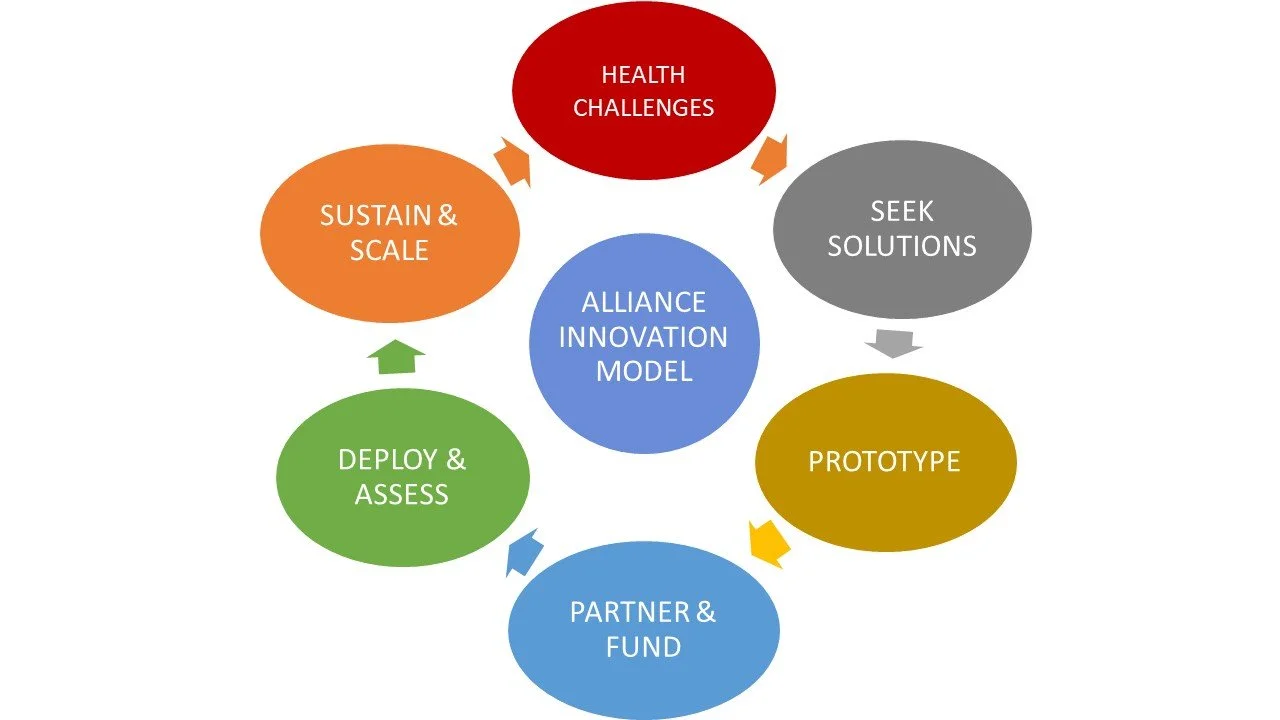
Alliance Innovation Model
A platform, pipeline, and process to efficiently address health industry challenges, prototype solutions, and sustain behavioral health and wellness.
Creativity Challenge
Do you have a breakthrough initiative that can make a difference in behavioral health and wellness in Arizona?
You can access the Disruptive Innovation Worksheet and inform our community network of your concepts, projects, and partnerships.
The Alliance can collaborate with you to find partners, resources, and funding.
Key Challenges
Behavioral Health Workforce
Ensuring that Arizona has the skilled behavioral health talent for providing services, technologies, and treatments is a top strategic priority for the region. Today's critical problem is insufficient numbers of people in the talent pipeline with the appropriate behavioral health skills. There are 598 job openings in behavioral health in Tucson right now, from entry-level positions to senior-level supervisors. And the forecasts are for the supply and demand gap to grow. The Alliance develops information on the demand for behavioral health workers and seeks solutions for educators to build courses, attract enrollments, and advance career opportunities.
Social Determinants of Health
This focus area works on overcoming disciplinary and organizational silos in treating behavior and physical and social conditions in communities and neighborhoods. For example, 4Tucson, a faith-based non-profit organization, initiated an innovative revitalization project in the Tucson Amphi neighborhood. The scheme applies the concepts of the Harvard Human Flourishing Program and Stanford d. School design thinking is based on five main domains: happiness and life satisfaction, mental and physical health, meaning and purpose, character and virtue, and close social relationships. The project demonstrates how neighborhood stakeholders can be motivated and connect to ideas and resources related to the social determinants of health.
Digital Healthcare
The technological explosion of digital health devices and services creates the need for better assessments of their effectiveness. Examples of technologies include AI-driven diagnostics, remote/home telecare, connected sensors, medication management, cyber security of medical records, wearables, biome monitoring, nutrition management, and more. These tools can improve our understanding of health status, track the course of illnesses and recovery, and enhance wellness and quality healthcare. This Alliance tracks these emerging technologies and evaluates their value to healthcare providers and customers.
Health Entrepreneurship
The Innovation Accelerator helps entrepreneurs develop solutions and start-up business models for healthcare and wellness solutions. Selected entrepreneurial teams receive cash payments, access to expert mentors, customers, and investors, and aid in acquiring government grants and contracts such as SBIR/STTR.
Personal Lifestyle Skills
Healthcare providers need evidence-based learning tools to help patients self-manage health and wellness. Lifestyle changes are essential to managing dementia, addiction, anxiety, exercise, nutrition, obesity, COVID recovery, social relationships, and sleep. Patient lifestyle changes are critical for reducing adverse impacts of chronic conditions such as heart disease and cancer. The Alliance seeks projects and partners to prototype, test, and scale projects with transformative potential.
Health Disparities and Equity
Health disparities are the variations that occur in a community between diverse groups because of individual predispositions, personal behavioral choices, and socioeconomic conditions. Quality of life is directly proportional to one's desire to take personal responsibility to mitigate negative biases (things we are born with) and make positive individual choices (drugs, alcohol, sexual behavior, etc.). The Alliance seeks solutions to make health care more readily available and affordable to those in need, regardless of ethnicity, age, or socio-economic factors. Alliance members are encouraged to share evaluations of interventions, curriculums, counseling methods, motivational tools, and digital applications to help individuals take responsibility for their health.